


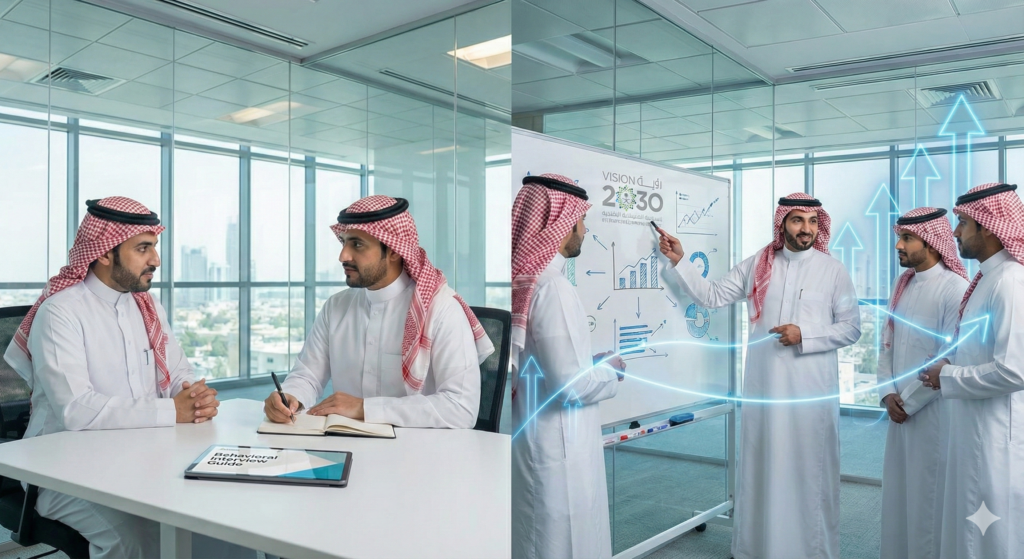
Modern Human Resources Management: From Smart Recruitment to Strategic Vision
In the past, the Human Resources (HR) department was simply a “personnel” office responsible for absences, leave, and payroll. But today, the game has changed. Large companies consider HR to be the CEO’s “first line of defense.”
If you don’t have a specific HR development strategy, you’ll be blindly focused on your organization. This guide links planning, clear recruitment, and leadership, but it won’t help you build true “human capital.”
More Than Just Hiring: The Concept of Workforce Planning
Before you start hiring, do you know what you want to achieve?
Workforce planning is the science of customer relations. It’s an analytical process that compares “what you have now” with “what you need in the future.”
Without proper planning, you’ll fall into the trap of “random hiring” or “disguised unemployment,” which will ultimately lead to losses for the company. (To ensure accurate narrative planning, we recommend carefully reviewing the foundations of Feasibility Studies and determining the operating budget.
Goodbye Gers: The Only Behavioral Interviewing Program
“Tell me about yourself?” This traditional question prepares you for the role of a trainee. Today’s pardons memorize answers. The quick fix lies in the modern approach we offer at Cure Training:
The Behavioral River Interviewing Program (Behavior-Based Interviewing).
Why is this necessary? This program prepares interviewees to anticipate, but then analyzes their past actions. The rule states: “Past behavior is the best predictor of future behavior.”
Better than asking: “Do you perform well under pressure?” (The answer will almost always be yes).
*And we know not to ask: “Tell me about a situation where you were under extreme pressure and unprotected?”
Continue At your discretion, it is recommended to combine these interviews with psychometric assessment tools that record personal, hidden motivations.
Business Industry: The Leadership That Delivers
Hiring talent is only half the battle; leading them is the other half.
A talented employee might leave a company because of a “bad manager.” This is where our second program comes in: Leadership That Delivers.
Orientation is not about positioning; it’s about “influencing people or teams to interact with others.” In this program, we focused on transforming managers from “commanders” to “inspirational leaders” who possess the skills:
- Empowerment: Giving increased confidence.
- Coaching: Correcting the course without demoralizing.
- Social Intelligence: This is a non-cognitive skill of Emotional Intelligence For Leaders which includes team loyalty.
Performance Management and Alternative Translation
A successful Human Resources Management system relies on continuous training. A fair evaluation system (Strategic negotiation) is essential.
Employees need to know: Am I on the right track?
Using precise Key Performance Indicators (KPIs) and comprehensively linking them to tangible results is crucial. In cases where evaluation methods are defined, active negotiation skills are essential to reach a mutually agreeable solution that preserves employee motivation.
Why Choose Cure Training Human Resources (HR) Programs?
The job market is evolving at an astonishing pace, and what was effective five years ago may no longer be suitable today.
Our programs are designed to bridge the gap between academic theories and practical approaches. And the “realities of the market.” Whether you’re looking to develop your recruiting skills through behavioral interviewing or hone your management skills through results-oriented leadership, we have the right tools.
For more global best practices in this field, visit the Society for Human Resource Management (SHRM) website.
Conclusion: Invest in People
All buildings can be constructed, but a passionate team is priceless.
Are you looking to elevate your Human Resources (HR) department to a professional level?
Contact us now for details on our specialized Human Resources (HR) and leadership programs.



0 Comments